Contextual Background
I support teaching in the Printmaking Workshops at LCC which is open to students of all disciplines and levels (BA, MA and PHd). More than 15 different processes are taught in the workshop, most of them entailing technical precise know-how and numerous steps.
At the moment, we run several in person inductions. Generally, we have an induction per process, with only certain processes being compiled in a single induction. Most inductions run as a half a day session (3 hours) and some go on for a full day (3 hours – break – 3 hours).
Evaluation
One of the greatest challenges of teaching in technical is that you don’t know what students you are going to get until you meet them on the day of the induction.
Some might become regular attendants, some won’t come in months or years. Likewise, what each student tries to get from the induction is very different because so are their briefs and the nature of their projects. Their interest on the technicality of each process is also variable, some will give a lot of importance to understanding the process inside out in order to work autonomously, whilst others only seek results and expect to be supervised at every step.
Inductions are mandatory for H&S purposes but, they are insufficient when it comes to the delivery of technical information. Most of them, need refreshing, demonstrations and supervision on their first sessions back after the induction.
Moving forwards
Inductions serve not only as a access point for them to be able to book open access sessions in the workshop, but also as an initial contact point for us. My approach is to strengthen the benefits and potential of inductions, and reinforce technical learning using other means.
INDUCTIONS TO GET TO KNOW
- Personally, I consider inductions a chance to create the foundation of a good technician – student relationship. Small groups are easier to manage and guide, and in 3 hours you have a chance to let them all introduce themselves: what course/year they are on, how they found out about the processes they are working on, whether they have experience in any other printmaking process, the nature of their work / mark-making / intentionality.
- Accessibility: inductions can also be a good chance for technicians to learn about undisclosed learning difficulties, physical limitations, or special needs of their students. For instance, one of our regular students is non-verbal. The first time she reached out was through email know she was intending to attend the induction. We invited her to come in and meet us, technicians, and the workshop prior to the induction. That first interaction served us to touch-base and know what to expect on the day. We ensured ways we could communicate.
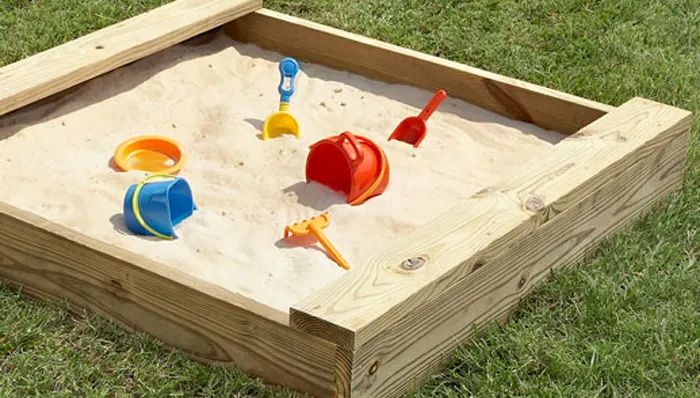
- Working without pressure: in this initiation to a printmaking technique nothing is at stake. Students work without pressure using a much relaxed and experimental approach, since they are unaware of the limitations of each technique, and don’t expect the work to add to anything, other than learning the process during the session. Allowing these playful interactions resonates with the Sandbox Method which suggest that playing is a “prime method to achieve a deeper understanding” (Andēl, 2019).
References:
Anděl J., Western Gallery (Western Washington University), . (2019). Back to the sandbox. Bellingham, Washington: Western Gallery, Western Washington University.
Vis D., . (2025). Research for people who (think they) would rather create. [Eindhoven, Netherlands]: Onomatopee.
Leave a Reply