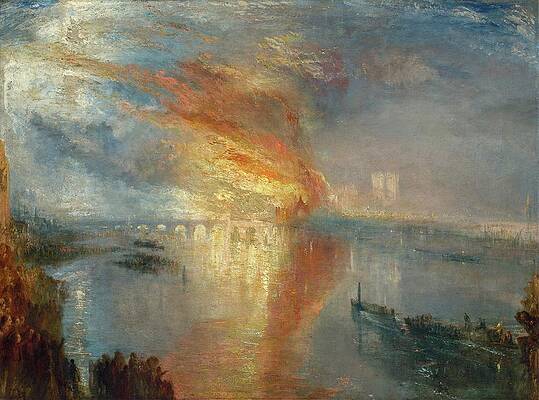
“The learning process is something you can incite, literally incite, like a riot.” (Audre Lorde: New York, 1980s) This statement specially resonates with me for I used a similar concept in my masters’ thesis ‘Bread, Print and Freedom’, which discussed anarcho-collective practices in the printmaking workshop and which was presented at IMPACT 12, an international conference for printmakers hosted by the University of West England in Bristol. My claim “everything is possible if ignited in the workshop”, (2021) is a clear call for action taking the workshop as a battlefield to attain the utopian.
These claims have two ideas in common: first, this notion of fuelling change, whether it is from a collective workshop or through learning processes, and, secondly, the perception of change being a contagious act, something that propagates like a riot or spreads like fire.
Perhaps, the common root of these two aphorisms is their shared view on critical pedagogy as an engine for real social justice. In words of Giroux, critical pedagogy “is premised on the assumption that learning is not about processing received knowledge but actually transforming it as part of a more expansive struggle for individual rights and social justice”(2011, p.6).
This critical approach was also the foundational principal of the School of Anarchism designed by Spanish educator Josefa Martin Luengo who questioned every aspect of the education system, and refused to follow any doctrine or stablished ideas. Instead, she advocated for educating in flexibility, constant change, transverse ideas and ethical morals (1993).
As Martin Luengo summarises, “we must learn as many theories, experiences, and schools of thought as possible, so that we can use them to the extent that they benefit an education in and for freedom, inserting their usefulness into an ideology that promotes social justice, human autonomy, and solidarity.” (1993, p.54). In essence, critical pedagogy is taking the chance during the learning process to inculcate critical thinking, that drinks from diverse sources, broad perspectives, and community-focused goals.
References
Giroux H. A., . (2011). On critical pedagogy. London: Continuum.
Gomez Urquia, A (2021) ‘Bread, Print and Freedom’, UK, Bristol:University of West England.
Lorde A., . (2019). Sister outsider. UK: Penguin Books.
Martin Luengo, J., . (1993) La escuela de la anarquia, accessed on 12 March 2026, at: https://es.anarchistlibraries.net/library/josefa-martin-luengo-la-escuela-de-la-anarquia.pdf
Leave a Reply