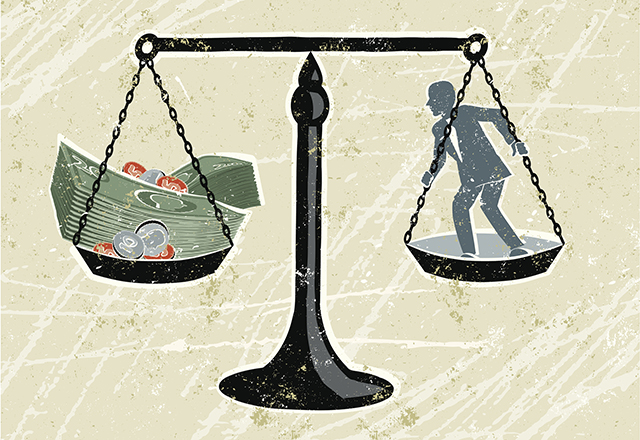
If the goal of social justice, specifically in Higher Education is to create an environment that provides equal opportunities and resources for all students and staff despite their race, gender, ethnicity, socioeconomic status, sexual orientation or any other diversity factor, why does the university experience differs so much from student to student?
Despite all the past decade efforts by HE institutions to make students experience as fair and equal as possible with scarce hardly applicable or narrowly targeted scholarships and miserly grants programs, anti-discrimination pledges, or purposely created teams to promote and support diversity and inclusion, why is there a general perception that Academia is still classist nowadays?
In the UK, social justice goes out of the window from the moment students are forced to apply for student and maintenance loans in order to get a university degree. As of 2025 the average borrower owed £50,000+ after graduating, that is 2.6 million people in England and Wales alone (Royal London, 2025). To make it worse, in many cases, repayments can barely pay off any of the accumulative interest rate added monthly, which results in debts only growing over time. As of June 2025, the SLC confirmed that 150,450 people owed more than £100,000 in loans. That is 33% increase compared to the same figure in January 2025 (ibid).
Taking that as the starting point -after all we are talking of tuition fees, the university experience entry price tag-, this setback can continue to manifest during their studies affecting the quality of their work or the hours they can dedicate to their studies. In the particular case of HE in the art & design industries, that gap can be seen in students accessibility to resources whether they are material or process based. For instance, in the context of a printmaking workshop we can notice that difference in students’s paper choice, size of work, or even the process they are using.
Luckily, in the printmaking and screen-print workshops at LCC, unlike in other universities, that difference gets breached by keeping material cost at the minimum with most sundries included in the workshop budget accommodating for the material costs of inductions, tests and proofs, an essential part to the development of their work and know-how. Personally, I believe it is through initiatives like this that creativity becomes truly accessible and not determined by each students personal budget.
Without doubt, this unbearable situation creates an exponential discrimination for those coming from working class and lower socioeconomic backgrounds, affecting not only the student experience whilst at university, but also their graduate life forth on. Hence, until tuition fees are not abolished for those coming from lower socioeconomic backgrounds, inequity is going to continue being embedded and inherent to the university experience in countries such as UK or US where there’s not a public pool of universities, forcing those who want to progress whether is academically or professionally, to get in debt trap even before they start making any money.
References:
Royal London, 2025, Number of borrowers with £100,000+ in student debt jumps by a third to 150,000. Available at: https://www.royallondon.com/about-us/media/Media-Centre/press-releases/press-releases-2025/september/number-of-borrowers-with-100000-in-student-debt-jumps-by-a-third-to-150000/. (Accessed 6 January 2026)
Biomedical Odyssey, 2019, Culture shock: my experience with classism in higher education. Available at: https://biomedicalodyssey.blogs.hopkinsmedicine.org/2019/07/culture-shock-my-experience-with-classism-in-higher-education/ (Accessed 6 January 2026)
Leave a Reply